
Summer Fellowship
Hudson Institute Political Studies offers a fellowship in political theory and practice to outstanding undergraduates and recent graduates that will broaden and deepen their understanding of public policy and American political principles. It combines the rigorous study of politics and political thought in a seminar setting, with policy workshops led by think tank scholars and experienced government officials, and also a distinguished speaker series of exemplary figures from public life.
ApplyProgram Overview
This program includes five components:
Rigorous seminars led by master teachers on topics in political theory and public policy.
A series of policy workshops led by policy analysts and experienced government officials.
A distinguished speaker series where national leaders from government, business, journalism, the military, and the academy provide unmatched insight into the true nature of public service and the country’s most pressing issues.
A series of outings and events, where students travel to places of national and historical interest in order to view politics through other lenses.
A mentorship program where summer fellows are paired with alumni mentors who can offer guidance and help fellows grow their professional networks.
Workshops
Meeting once per week during the fellowship
Policy workshops are led by think tank experts and experienced government officials who provide academic and practical explanations of their topics, before leading students in a collaborative policy simulation. Students prepare for the discussion and the following simulation by reading assigned, topical material in advance of the meeting. These interactive workshops allow students to actively engage in the policy making process, and wrestle with the policy problems of our day. Students complete 1-2 policy workshops per week. Each policy workshop is different, and the topics range from foreign policy and military decision making to bioethics legislation and criminal justice reform. Below, you will find example workshops from the 2025 Summer Fellowship.

Criminal Justice Reform
This week five workshop saw the 2025 cohort examine contemporary issues regarding race, crime, and criminal justice reform. In seminars held at the Hudson Institute, students discussed race relations in America, and their relationship to policing. These conversations also concerned public opinion of police as well as the need for law enforcement; students reviewed the 2018 First Step Act, its implementation, and approaches to prison and rehabilitation. Led by John P. Walters — Hudson CEO, Director of the Political Studies program, and former director of the White House Office of National Drug Control Policy (ONDCP) — students gained an appreciation for issues of race and the need for sustained public attention to crime and criminal justice reform.

Man in the Age of Technology
As artificial intelligence and wearable technology advance toward making real a world hitherto only imagined in science fiction, what will the future be for humanity? In this 2025 policy workshop, students studied biological and ethical perspectives on humanity and technology. Their seminar discussion of these concerns led them to investigate transhumanism, its proponents, and its opponents. After mutually broadening their understanding of the issues at hand, students were then assigned a particular perspective and asked to debate each other about cybernetic technology and the human future.
Crisis in the Taiwan Strait
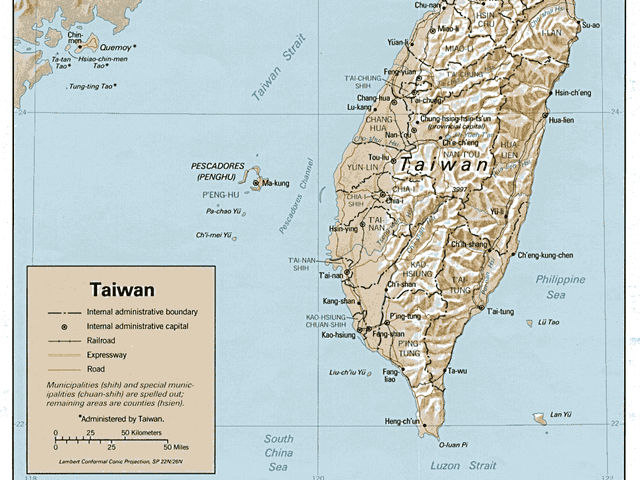
This workshop, conducted during the fifth week of the 2025 Fellowship, brought diplomatic history to bear on perhaps the most ominous potential flashpoint in contemporary geopolitics. Students prepared for the crisis simulation with two three-hour seminars — in the first they discussed three Joint Communiques of the United States of America and the People’s Republic of China (1972, 1979, 1982) as well as significant domestic legislation from both countries; in the second, discussion shifted to strategists’ reflections and contemporary analyses of cross-Strait relations. During the simulation, groups were assigned countries party to the conflict. Responsible for acting as their country would in a time of crisis, students learn about the dictates of necessity and the limited options available to government officials of every country as they pursue their state interest. As they reflected on the development of grand strategy in the region, students learned about how diplomacy, trade, and military affairs factor into decision-making at the highest levels of government.
The Supreme Court in our Federal Republic
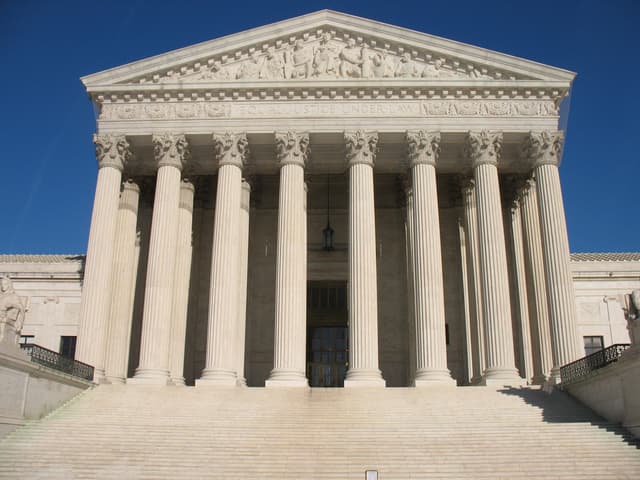
In the first policy workshop of the program, students take on roles of petitioners, respondents, and Justices in arguing two recent Supreme Court cases. In 2025, students relitigated District of Columbia v. Heller, a landmark 5-4 vote from 2008 regarding the Second Amendment, National Labor Relations Board vs Noel Canning, a unanimous decision from 2014 that delimited the President’s recess appointment authority, Grundy v. United States which held that the regulations by the U.S. Attorney General do not violate the nondelegation doctrine, or Seila Law LLC v. Consumer Financial Protection Bureau which found that a sole director that could only be terminated for cause violated the separation of powers. In each case, fellows read through the briefs of petitioner and respondent, as well as other relevant documents such as Federalist Papers. In oral arguments the Fellows were guided by Jeremy Rozansky, J.D., University of Chicago Law School, Adam Chan, J.D., Columbia Law School, Tiernan Kane, J.D., Harvard Law School, and Ryan Proctor, J.D., Harvard Law School. As the four groups learned about how cases are tried at the summit of the United States legal system, the students came to understand how various interpretations of our nation's law must sometimes be resolved by the judicial authority.